Stories Freddy Albert Sanjaya
🍨 The Inside Scoop- Arie Aulia Nugraha 🇮🇩
Get to know our mentor- Arie Aulia Nugraha, a Senior Design Lead at Lifestyle tech company.
Freddy Albert SanjayaGet to know Diamond Ho, the Product Design Lead at Facebook.

Thanks for stopping by for another installment of our mentor interview series! I’m personally really stoked to share this mentor’s story. To give you an inside scoop… on the Inside Scoop, it took us TWO meetings to get this interview done because we had so much fun just chatting it up. Time flies when you’re vibin’.
Diamond Ho is currently a product design lead at Facebook Reality Labs building secret projects 🙈. She is also one of the funniest and most authentic people I have ever met. She doesn’t sugar coat and she is always 100% herself. She does this to help you grow personally and professionally. If you’re open to that feedback, you can go really far. These are traits I’ve come to admire in strong, female designers in the field. I don’t know about y’all…but I want to be Diamond when I grow up someday. 🤣
Thank you, Diamond, for agreeing to meet and share your story with the community. Everyone at ADPList.org and I are very thankful to have you with us on this journey.
— Amber
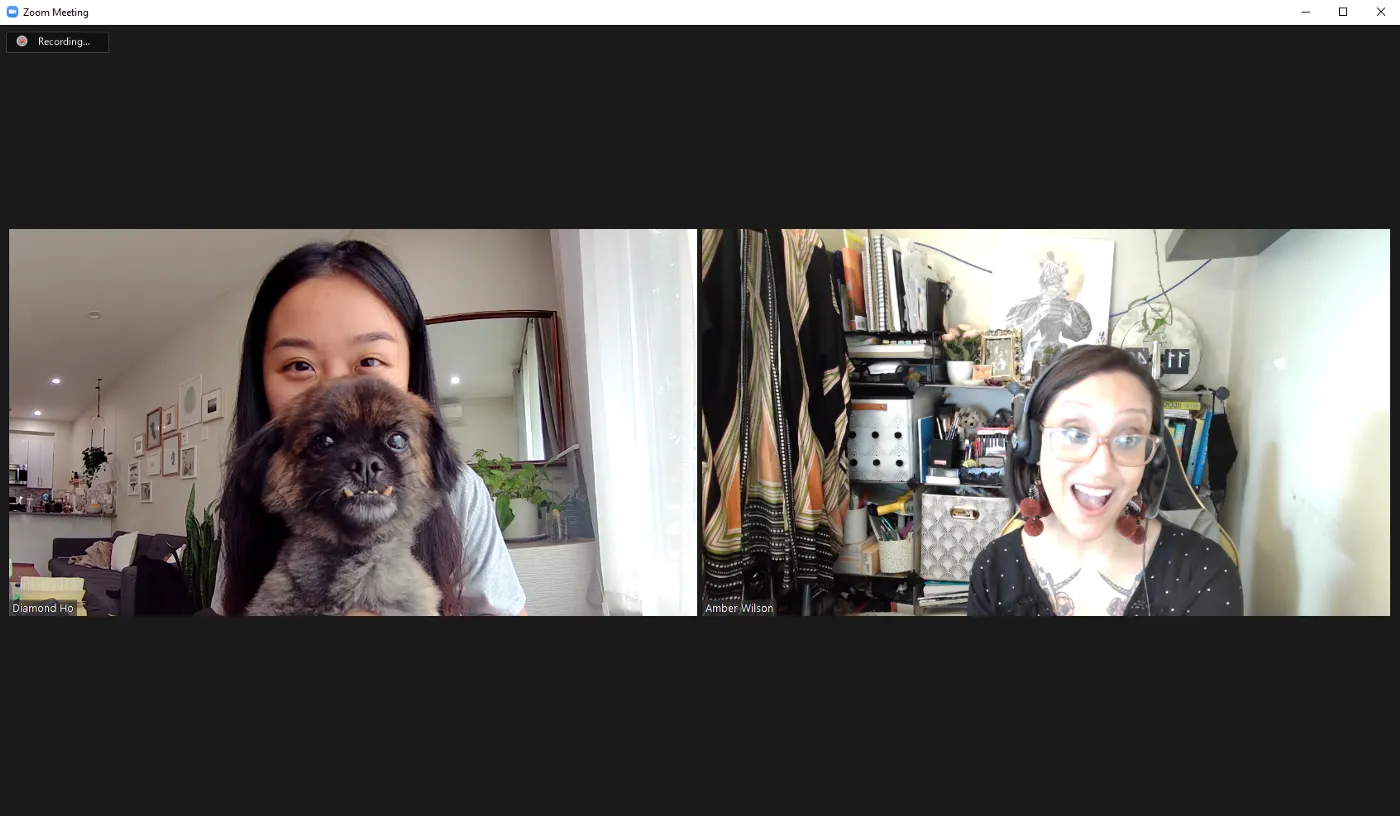
🦊= Amber KB Wilson (ADPList Ambassador)
💎= Diamond (ADPList mentor)
🦊 Okay, let’s get to know you, Diamond. Tell me about yourself.
💎 I grew up in Hong Kong. I was really bad in school and I didn’t know what I was going to do in the future. I just knew I liked drawing, but I wasn’t good enough to be an artist. In Hong Kong, there’s not much of a design world, let alone a product design world. I think the only design that existed was interior, graphic, and fashion design. Hong Kong is a very small city so we didn’t learn that and I didn’t know what to do. I just thought I would be a failure in life. A lot of teachers didn’t like me because I was always outspoken. I was very loud. I don’t behave as a “lady,” I quote them. They had convinced me that I would be a failure because I couldn’t follow rules. So thinking I was going to be a failure was a big part of me when I grew up.
I wanted to go to America, because I watched “Gossip Girl,” you know, the greatest TV show.

But my dad picked Seattle for me to go to, and that was the end of my Gossip Girl dream because…you know, Seattle.
I arrived in the US and went to a community college because that’s the cheapest way to get into college. There were very limited design classes so I took graphic design classes. After that, I applied to CCA without knowing that NorCal is very far from LA. I thought I was going to LA. I’m from Hong Kong… I didn’t know how big a country could be. I didn’t like the Bay Area, because I wanted to go somewhere that’s sunny. Like what Katy Perry sings about. I applied for graphic design because I didn’t know any other major. And the day before I started, I was like, “Huh, I wonder what industrial design is.” So I just applied and switched to industrial design.
When I was in school, I was a great student, but I wasn’t talented as an industrial designer. So I always got good grades because I worked really hard, but I couldn’t find an internship. When I graduated, I had a hard time looking for an industrial design-related job. But because I was a good student, my department chair actually referred me for a lot of job opportunities.
There was an experience design internship at Logitech and I don’t know what it was. So I was like, Oh, let me apply. I was so desperate because I was on a visa. I needed to find a job within 90 days of my graduation. I actually got that job, luckily. That job wasn’t even related to design. Honestly, it was kind of like an administrative job, but they wanted design blood because Logitech back then was so lame. I figured I would just stay there for a little bit and look for new jobs.
Logitech rebranded literally a month after I joined and they had this new, hip route they were moving towards and they hired their first UX director. He was from the Fuse project and he had a hard time hiring UX designers because nobody wanted to work for Logitech back then because it was lame.
I told him, hey, if you can offer me a job, I’ll work for you.
He asked if I knew how to use Photoshop and I answered that I kind of did and he said, “Sure, you’re hired.”
That was eight years ago. Back then it was so different. My husband went to school for interaction design. So these were the first-gen product designers. He literally has jobs coming to him. He never experienced the job hunt until 3 years into his career. He was one of the few people that had interaction design in his resume without having a job and that was such a new industry.
I never thought I wanted to do UX. Mine is such a unique story. It’s sort of unheard of today. And now, being at Facebook, I know that the talent pool is crazy. The bar is so high. If I were a student today, I probably wouldn’t be able to get a job.
🦊 OMG. Don’t sell yourself short, haha. That’s crazy to hear regarding how the field has changed. Okay, so let’s do some soul searching. What kind of impact do you want to have in the world? What problems do you care about?

A big part of my design philosophy is to identify those small delights and bring it to people.
If I can put a smile on your face because you saw my design… I’ve achieved a lot.
That might be a low bar, but I think on a larger scale, if I can work on anything medical product-related, I think it’ll be very exciting. I really wanted to get into medical technology. Specifically the psychological side of medical technology. I think my design guilty pleasure is designing consumer electronics. I love it. I think it’s because I’m from an industrial design background.
But deep down, I really, really wanted to do medical work. And the sad thing is medical work is probably the least funded when it comes to design. So as a result, I haven’t had a chance to transition.
When I first joined Facebook, I actually joined an integrity team. It was so cool because we were tackling a big problem — reducing hate speech on Facebook.
I actually didn’t think it would be that impactful. The more impactful the work, then it’s the least amount of design you’re doing. If you’re doing just a beautiful design, it’s not going to touch a lot of people. If you’re doing a specific design to serve a specific purpose, then that’s when you’re actually solving a specific problem. And that’s when you have a high impact on your work.
When I was on the integrity team, the UI work was not very heavy. However, oh my god, we decreased hate speech on Facebook significantly based on our metric. I actually cannot announce the number, but it was such a huge number within only a year of work.
I thought that was also very impactful, but if I’m being honest, that doesn’t really charge me as a designer.
🦊 Now we’re gonna get the deeper. Can you tell me about a time that you didn’t know, you would make it and you overcame it?
💎 Let me talk about like a very significant one. It was life-changing for me. So I went to public school and I failed 13 subjects at one point. I didn’t know what I would do. And I think that was the time I was convinced I was gonna be a failure. In Hong Kong, you can only get into colleges, if you have good grades. They don’t value creativity, they don’t value critical thinking.
I was growing up in this place that did not value who I am.
The only person that was encouraging me was my mom. If it was a teacher or a friend, that would not have been as impactful to me. It was my mom that had a direct impact on me. Instead of making me repeat a grade at a local school, she transitioned me to an IB School (International Baccalaureate). It’s a type of educational system that’s very new in Hong Kong — private schools that are very expensive. She put me in there because she thought that my critical thinking would be valued there. It was because of that school, I was actually able to be validated. I went from the last two students of my grade to the first five students of my grade, just because I switched environments.
Looking back, I think if I didn’t make that move, I wouldn’t be where I am today. I think it’s such a significant thing. Sometimes when a flower is not growing, don’t blame the flower, blame the pot.
As I grow as a human being, I acknowledge that if my mom didn’t double down on my critical thinking, my ability to speak up and speak my mind, I wouldn’t be where I am. I say that to my mentees at work as well.
It’s like, yo, my biggest secret is that I’m a lead designer, but I don’t prototype. I hate prototyping. I have managers that tell me I have to learn prototyping — but I also have managers that say… then don’t do prototyping. So because I don’t focus on what I can’t do, I actually was able to double down on a lot of other things that I’m passionate about and I’m good at. I think this was a huge, pivotal moment for me.
I hope that if people are in this situation, and they feel like everything is not working out for me, just think about things that make you happy. My manager recently told me, “don’t mess with happy.” If you’re happy, double down on that. Don’t mess with that.
🦊 What type of mentorship do you like to provide? Or like, what are your views on mentorship in general?
💎 When I was in college, a big part of my mentor/teachers was that they were not very honest to me. I wasn’t able to actually understand what I was missing. And as I got into this industry — and I became a mentor, and I got good managers, bad managers — I realized for me, having good mentors that can help you identify the delta is probably the most important thing.
So that’s kind of my style and I write that on my profile because sometimes I feel like I’m too harsh. I am just a very honest mentor, but I come from a place of love. You’ll also have to be receptive to feedback and understand that we’re not here to judge you, we’re here to help you. If you have that mindset, I feel like you’ll be able to excel in your life.
My mentorship style has always been very direct, and I kind of want to tell you what I think has to change. But I also keep it pretty open-ended. If anyone’s just wanting to chat and ask for career advice… I’m all for that. I had a very unconventional route to my career. If we go all the way back to me being in Hong Kong, then coming to the US, I feel like it’s really about looking for an environment that fits you. That’s why I love helping people to understand what will help empower them to double down on things that they really are passionate about.
Really, really look for things that make you happy. Don’t lie to yourself. I think there was a long while that I was lying to myself, like, Oh, I love doing CAD. But actually, I hate it. Every time I open it, I actually have a mild panic attack. And it takes me a while to be like, Okay, I’m doing this now. But I found that when I open up like a Sketch file or a Figma file, I’m in my space. This is my playground, you know?
As long as you know what you’re trying to do…
As long as you know what you want….
It can’t be wrong.
I mean… with the obvious caveat — we all have to be decent human beings.
I always tell people that when I joined a team at Facebook I didn’t care about the product. However, they were moving me to New York. That was my priority. I knew I wanted to move to New York. So double down on what you know you want instead of lying to yourself. Be clear about your goals and stick to it.
🦊 So tell me, what are your three most common questions you get as a mentor? And how do you answer them?
I get that a lot. I always tell people the same thing.
Those will always make you stand out. I think that’s how I got a job at Facebook. I was a decent storyteller. That’s why I see that a lot of people struggle with interviews. It’s because they’ll dwell on a point or they’ll get so nervous. If you treat it as like, I don’t want to say a performance…but it’s as if you’re trying to sell this to a friend, how would you do it?
Being a good storyteller is great. Also, physical appearance, aka visual design, is very important. Like I said in my group session, I don’t want to be shallow, but you know, reality is shallow. If you’re not a visual designer, at least get your portfolio to a decent place. You don’t have a great visual designer, you just have to be clean, give attention to details, and all that.
This is a huge thing because I think it goes back to the self advocacy part. And as women, we’re not really good at self advocacy. There’s actually data to support that — I’m not just throwing out a sexist comment. Women are really not good at that. We’re always doing this thing where we work so hard… hoping people will recognize that. Also, I think being Asian, that’s a huge part of me as well. Asians are always like, Oh, don’t peek out. I think in Britain or Ireland, it’s called the tulip problem… so like, don’t be the tallest tulip basically. Conan O’Brien talked about it a lot. It’s like, you don’t want to stand out, you want to blend in. But at the same time, you want to be the best at this level.
It’s so funny, I just gave a talk about the art of self-advocacy. The very next day, I was in this situation where I did a piece of big work, and the lead didn’t give me due credit. I was so upset. He almost even claimed the credit.
So then I was like, in my voice deep down, “just look away, you know, he’s way above you. You shouldn’t say anything.” But then I was on the street, walking with my husband. I thought, “you know what’s ironic? I literally gave a talk about self advocacy. And now I struggle to advocate for myself.”
I finally was able to put together my thoughts and I called that lead out for not giving me credit — and he actually wrote me an apology. He also publicly recognized me and I was so proud of myself.
A big part of self-advocacy is really knowing what your worth is. I think a lot of times, we’re trying to play it down. We try to be humble.
Look, you can be humble, but at the same time, know your worth, and advocate for it.
So that’s a huge part of getting a promotion and getting a good rating. It’s also tied to good storytelling. What is the narrative you’re trying to put out?
And that’s a huge thing at Facebook. If I want to become a senior designer (I went from a mid-level to a senior, to a lead,) I actually have to understand what my style is like as a senior designer, as a lead designer, and then slowly actually get that like to prove it to people, I was able to do that.
Chances are, if you can get the promotion it’s probably because you’re ready. Open up the conversation with your managers to identify the delta. If your manager sees that you’re not ready, talk to them and ask them why.
It could be something like, oh, your manager thinks that you’re not doing enough share outs… great! That’s a very easy, solvable problem. A lot of these deltas are very solvable. When you avoid that conversation, you can’t work on it. If you want to get married, would you hope for a proposal or would you talk to your partner about marriage? You wouldn’t just sit and wait for a proposal, you would talk to your partner and see if you two are ready for marriage. It’s the same thing with your manager. The key to getting a promotion is just talking to your manager.
🦊 Okay, one final question. So if there is one thing you could tell every single mentee you have ever met or will meet — What would that one piece of advice be for design?
If something makes you happy, double down on that.
If it doesn’t, don’t fake it. Be honest about that.
You know this is a huge part of becoming an adult. Sometimes you kind of lie to fit into society standards or like, wanting to work at Facebook, because of whatever reason. I’m just like, come on, you want to work for Facebook because they pay more. And that’s fine. But just be honest about it. If you’re doing something that makes you happy, don’t look away because you’re probably onto something.
This question is hard because there are different types of mentees, but not messing with your happiness is one that’s just good life advice. To give some backstory, I hit my vesting cliff at Facebook and I’ve been really thinking if I should look for a new job. I realized, though, that I’m really happy and I haven’t set that for a long time in my career. I’m really happy and the worst days are better than my best days in a bad place. That’s what you want for your life right?
The grass is always greener on the other side, but if you look at where you are now…you realize…hey, my grass is pretty f*cking nice.
Of course, it’s also great if you want to keep challenging yourself… but I think you just have to be aware of what you want. My therapist always says that happiness is rare for people.
Get mentored by Diamond on adplist.org!
👉 You can book time with her here!👈
👉 Follow her on Twitter here! 👈
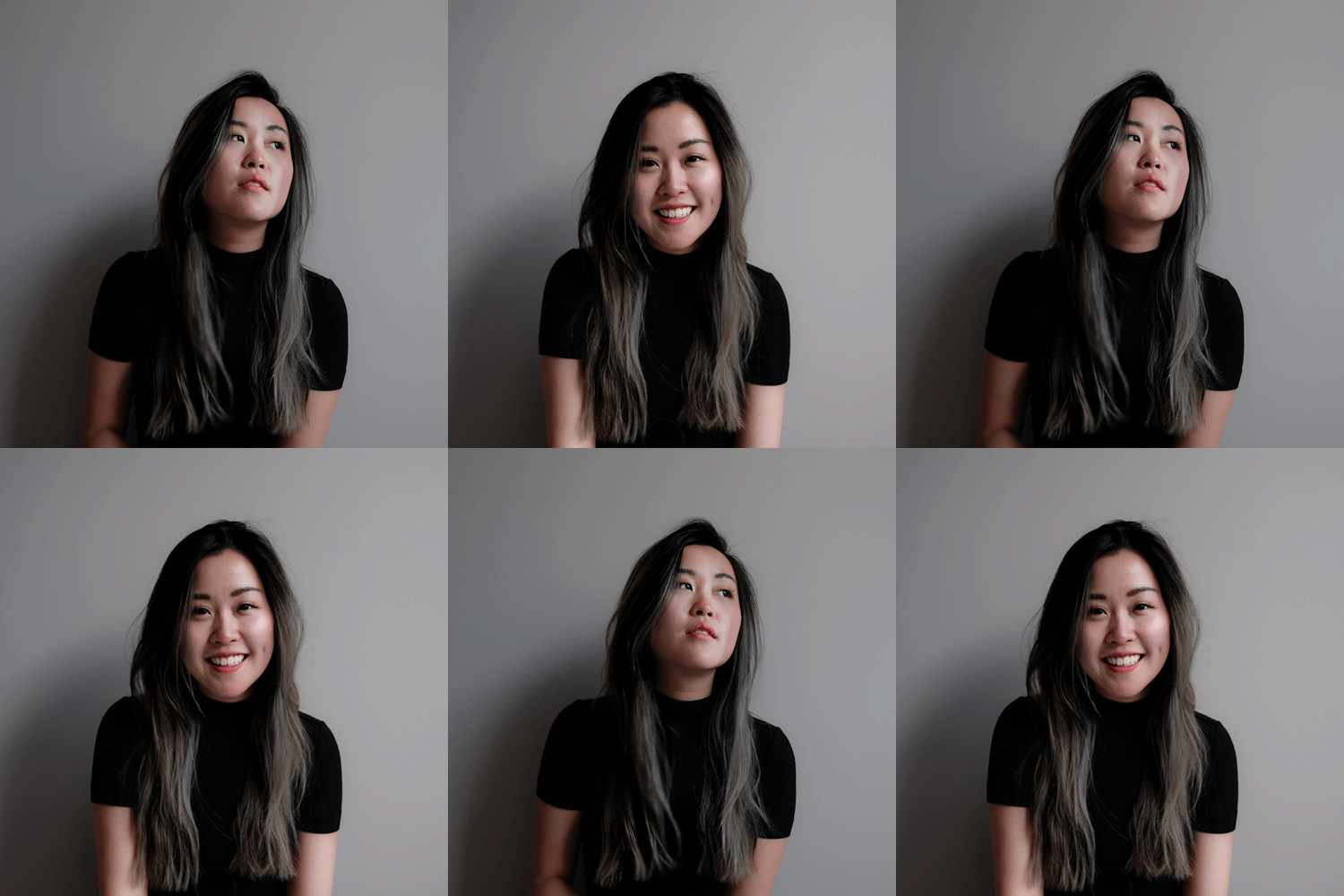
🙋♀️ Feel free to bring questions on Career Advice, Interview Techniques, Leadership, and your portfolio!
💖 Her interests also include: AR/VR, Entertainment, Community, and MedTech
📚 Her industries are: Creatives and Tech
🗣 She speaks: English, Mandarin Chinese, Cantonese, and Turkish
Thanks for reading!
Free sessions available with verified mentors on ADPList.
Get to know our mentor- Arie Aulia Nugraha, a Senior Design Lead at Lifestyle tech company.
Freddy Albert SanjayaLet's get to know our mentor Jannis Hegenwald, a Design Manager at Atlassian.
Freddy Albert SanjayaGet to know our mentor-Gloria Lo, a Product Designer at Canva.
 Denisse Urdaneta