Product Management Meenal Relekar
Writing Techniques to Boost Your Product Marketing Storytelling
ADPList Mentor and Product Leader, Meenal Relekar, shares her secret to writing tasks effectively as a product marketer.
Meenal RelekarThe 11 best product management books for 2026 — Inspired, Continuous Discovery Habits, Transformed and more, with who each is for and its big idea.

The best product managers never stop learning — but the PM bookshelf has changed. A decade ago it was mostly frameworks and feature specs. In 2026, the books that matter teach outcomes over output, continuous discovery, and how to keep customers at the center while AI reshapes how products get built.
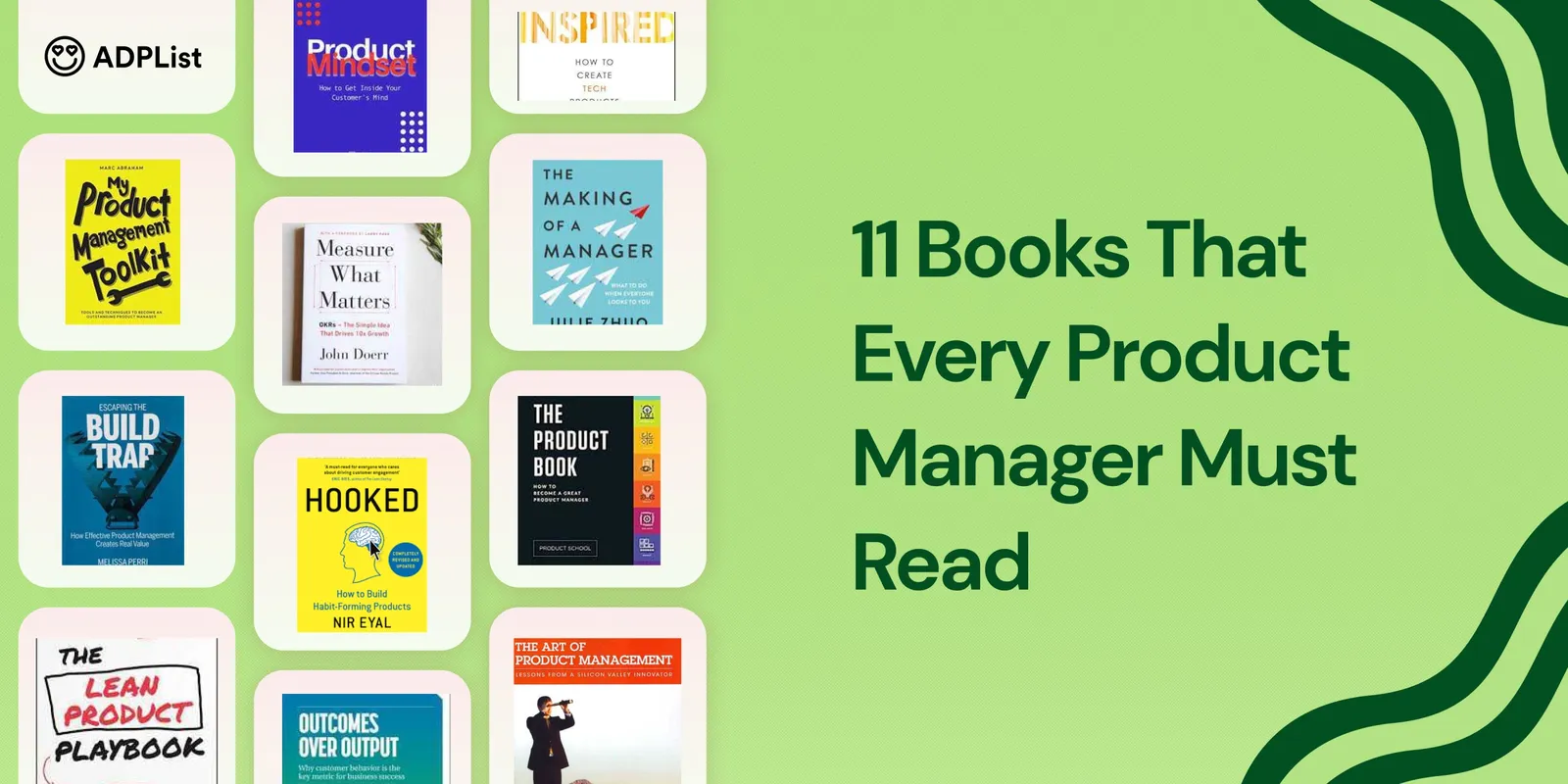
Here are the 11 product management books we recommend — the ones ADPList’s product management mentors keep coming back to in sessions:
| Book | Author | Best for |
|---|---|---|
| Inspired | Marty Cagan | Understanding how strong product teams actually work |
| Escaping the Build Trap | Melissa Perri | Shifting your team from shipping features to driving outcomes |
| Continuous Discovery Habits | Teresa Torres | Building a weekly customer-interview habit |
| The Lean Product Playbook | Dan Olsen | A step-by-step path to product-market fit |
| The Mom Test | Rob Fitzpatrick | Customer interviews that don’t lie to you |
| Outcomes Over Output | Josh Seiden | Setting goals around customer behavior, not features |
| Hooked | Nir Eyal | Designing engagement and retention loops |
| Measure What Matters | John Doerr | OKRs and goal-setting at any scale |
| The Product Book | Josh Anon & Carlos González de Villaumbrosia | Aspiring and first-time PMs |
| The Making of a Manager | Julie Zhuo | New managers and first-time product leads |
| Transformed | Marty Cagan & SVPG partners | Leaders moving a company to the product operating model |
Inspired (2nd edition, Wiley) is still the closest thing product management has to a canon. Marty Cagan shows how companies like Amazon, Google, Netflix, and Tesla define, discover, and deliver products — covering how to staff product teams, run lightweight discovery, and build a real product culture.
The one big idea: the biggest risk isn’t building the product wrong — it’s building the wrong product. Empowered teams that discover value beat feature factories that just ship.
Best for: every PM. If you read one book on this list, read this one.
The “build trap” is measuring success by how much you ship. In Escaping the Build Trap, Melissa Perri shows how to set up strategy, communication, and org structure so product management solves real customer problems while hitting business objectives — at any company size.
The one big idea: a company that rewards output will drown in features; a company that rewards outcomes builds products people actually need.
Best for: PMs and product leaders stuck on a roadmap treadmill.
Published in 2021, Continuous Discovery Habits has become standard reading for modern product teams. Teresa Torres turns customer research from a one-off project into a weekly habit, with the product trio (PM, designer, engineer) talking to customers every single week.
The one big idea: the opportunity solution tree — a visual map connecting your outcome to customer opportunities to the solutions you’re testing, so every roadmap bet traces back to a real customer need.
Best for: PMs who know they should “talk to users more” but don’t have a system for it.
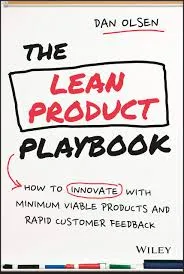
Most products fail because they never reach product-market fit. In The Lean Product Playbook, Dan Olsen breaks fit down into a six-step process: pick your target customer, find underserved needs, define your value proposition, scope an MVP, prototype it, and test it with real customers.
The one big idea: the Product-Market Fit Pyramid — fit isn’t luck, it’s the result of deliberately stacking market decisions under product decisions.
Best for: PMs and founders building something new from zero.
The Mom Test is the shortest, most practical book ever written on customer interviews — used in curricula at Harvard and UCL and inside companies like Shopify. Rob Fitzpatrick’s point: everyone (including your mom) will lie to protect your feelings, so stop pitching your idea and start asking about their life.
The one big idea: ask about specific past behavior (“when did this last happen? what did you do?”), never hypothetical futures (“would you use this?”).
Best for: anyone who runs user interviews — pairs perfectly with Continuous Discovery Habits.
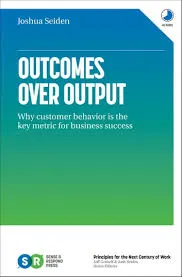
Short enough to finish in an afternoon, Outcomes Over Output gives teams a precise definition to rally around. Josh Seiden shows how to plan work, write roadmaps, and manage stakeholders around behavior change instead of feature lists.
The one big idea: an outcome is “a change in customer behavior that drives business results” — if the behavior didn’t change, the feature didn’t matter.
Best for: teams whose OKRs keep turning into feature checklists.
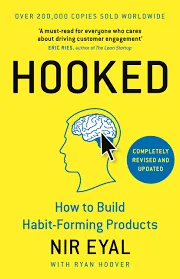
Hooked explains why some products become part of users’ daily routines while others get opened once and forgotten. Nir Eyal’s four-step Hook Model — trigger, action, variable reward, investment — is the vocabulary most growth and engagement conversations still run on.
The one big idea: habit-forming products don’t rely on ads or willpower; they close a loop where each use makes the next use more likely.
Best for: PMs working on engagement, retention, or consumer products.
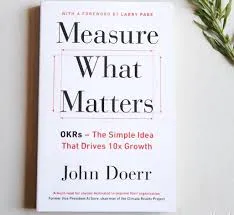
Venture capitalist John Doerr brought OKRs (Objectives and Key Results) to a young Google — Larry Page credits the system in the book’s foreword. Measure What Matters covers how to set ambitious objectives, define measurable key results, and keep teams accountable without micromanaging.
The one big idea: goals only work when they’re transparent, measurable, and few — commit to what matters and say no to the rest.
Best for: PMs who own goal-setting, and anyone whose company “does OKRs” badly.
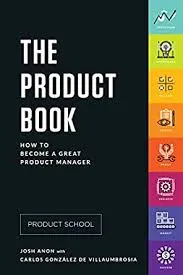
Built from Product School’s curriculum, The Product Book is an A-to-Z guide to the PM job: working with engineers and designers, writing specs, prioritizing, and shipping. It gives a realistic picture of a PM’s day before you’ve lived one.
The one big idea: product management is a learnable craft with concrete day-to-day skills — not a personality type.
Best for: career switchers and aspiring associate product managers who want the whole job mapped out.
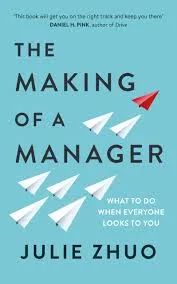
Julie Zhuo became a manager at Facebook at 25 and later its VP of Product Design. The Making of a Manager (2019) walks through the first three months and beyond — running meetings, hiring, giving feedback, and managing a growing team.
The one big idea: great managers are made, not born — management is a set of learnable behaviors, starting with “what does a great outcome look like for my team?”
Best for: PMs stepping into people management or leading teams for the first time.
The newest book on this list (Wiley, 2024). Transformed answers the question Inspired and Empowered left open: how does a company that doesn’t work this way actually change? It’s built on real transformation case studies from the SVPG partners’ consulting work.
The one big idea: the product operating model — funding teams instead of projects, empowering them with problems instead of roadmaps, and letting evidence beat opinion.
Best for: senior PMs and product leaders driving change inside traditional organizations.
Reading Inspired won’t untangle your actual stakeholder mess, and Continuous Discovery Habits can’t tell you whether your interview notes point to a real opportunity. That’s where a conversation with someone who’s done it helps.
ADPList’s mentors include product leaders who’ve lived every book on this list. Book a free session with a product management mentor, or if you’re still mapping the road ahead, start with our product management career path guide and why mentorship matters for aspiring PMs. And when choosing where to find a mentor, the best mentorship platforms guide compares the leading options.
Start with three: Inspired by Marty Cagan for how great product teams work, The Product Book by Product School for the day-to-day mechanics of the PM job, and The Lean Product Playbook by Dan Olsen for a step-by-step process to find product-market fit. Together they cover mindset, craft, and process.
Inspired: How to Create Tech Products Customers Love by Marty Cagan is the most widely recommended product management book — it defines how modern, empowered product teams discover and deliver products. The best pick for you depends on stage: Continuous Discovery Habits (Teresa Torres) for mid-level PMs improving discovery, and Transformed (Cagan and the SVPG partners, 2024) for leaders changing how their org works.
Combine three things: read the core books (Inspired, Escaping the Build Trap, The Lean Product Playbook), ship something small — a side project forces real prioritization and user feedback — and learn from people doing the job. Free sessions with product management mentors on ADPList let you pressure-test what you read against real experience, and our guide to finding a mentor shows how to get started.
Yes. The second edition (2017) remains the standard text on product discovery and empowered teams, and its ideas underpin most modern PM practice. For the current state of Cagan’s thinking, pair it with Transformed (2024), which covers how companies move to the product operating model.
There’s no single canonical AI product management book yet — the field is moving faster than publishing. The fundamentals in this list still apply directly to AI products: continuous discovery (Torres), rapid experimentation (Olsen), and outcome-based goals (Seiden) matter more, not less, when models change monthly. For current AI-era practice, follow the SVPG blog and practitioner newsletters alongside these books.
There’s no magic number — depth beats volume. Reading two or three of the books on this list carefully and applying one idea from each (say, weekly customer interviews from Continuous Discovery Habits) will do more for your career than skimming twenty. Re-reading Inspired every couple of years is a common habit among senior PMs.
Free sessions available with verified mentors on ADPList.
ADPList Mentor and Product Leader, Meenal Relekar, shares her secret to writing tasks effectively as a product marketer.
Meenal RelekarGet to know the 12 top product design blogs in 2022!
 Farah Radzi
Learn how to decide the best UX research methods for your product by our speaker and partner- Ash Oliver from Maze.
 Ash Oliver